Source Breathable Waterproof Sleep Tape for Snoring, Mouth Breathing, and Dry Mouth Relief
Find 30 options for breathable waterproof sleep tape designed to support nasal breathing and reduce snoring. Compare materials like non-woven fabric and cotton blends, adhesive types, and certifications to select the right solution for your needs.
Key considerations
Products List




Comprehensive Sourcing Guide
Breathable Waterproof Sleep Tape Sourcing Guide
Sourcing breathable waterproof sleep tape requires a careful balance between material performance, regulatory compliance, and commercial viability. This guide synthesizes observed market data and trusted category knowledge to help procurement professionals navigate the complexities of this niche health and wellness product. By focusing on verified attributes and critical verification steps, buyers can mitigate risk and ensure that the selected suppliers meet both functional and legal requirements for international distribution.
The following sections provide a structured approach to evaluating suppliers, understanding technical specifications, and managing commercial terms. Each section is designed to address specific decision points in the procurement lifecycle, from initial product scope definition to long-term quality assurance. Buyers should use this guide as a reference framework to develop their own due diligence checklists and supplier evaluation criteria.
Product Scope and Observed Listing Signals
The market for sleep tape presents a diverse range of product variations, primarily distinguished by material composition, adhesive type, and intended physiological benefit. Observed listings indicate that products are commonly marketed with benefits such as anti-snoring support and breathing correction, positioning them as tools for oral health and sleep quality improvement. The core keyword "breathable waterproof sleep tape" suggests a demand for materials that maintain integrity during sleep while allowing for some degree of air permeability, although specific waterproof claims must be verified against actual product datasheets rather than assumed from general marketing terms.
Current market observations reveal significant variability in product attributes, including material types ranging from non-woven fabric to blends of cotton and spandex. Buyers should note that while some listings specify "medical sensitive glue," others may use different adhesive formulations, which directly impacts skin compatibility and removal comfort. The observed price range of $0.02 to $1.00 USD and MOQs varying from 2 to 100,000 pieces indicate a highly fragmented supply chain with options for both small-scale testing and large-volume manufacturing. Procurement teams must carefully cross-reference these signals with actual sample quality to avoid discrepancies between marketing claims and physical product performance.
Technical Specifications to Verify
Material composition is the most critical technical factor in determining the comfort and efficacy of sleep tape. Buyers should verify whether the product is made from non-woven fabric, cotton blends, or other synthetic materials, as these directly influence breathability and skin irritation potential. For instance, observed specifications include materials such as "Non-Woven Fabric" and "95% Cotton + 5% Spandex," each offering different tactile experiences and durability profiles. It is essential to request material safety data sheets (MSDS) and specific fabric weight or thickness measurements to ensure the product meets the desired comfort standards for overnight use.
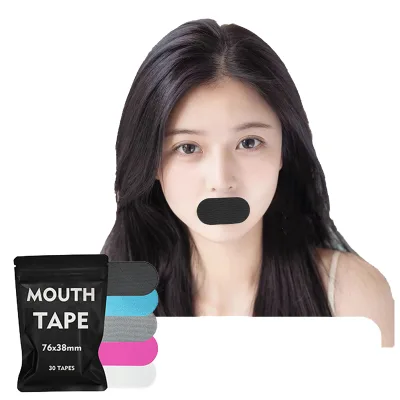
Adhesive performance and dimensional stability are equally important technical parameters that require rigorous verification. The type of adhesive, such as "Medical Sensitive Glue," must be evaluated for its holding strength and hypoallergenic properties to prevent skin damage upon removal. Additionally, buyers should confirm the exact dimensions of the tape, as observed standards include sizes like 76mmx38mm, 55mmx40mm, and 75mmx48mm, or custom sizes. The single package size and gross weight, such as 9.5X11X1.5 cm and 1.0 kg respectively, are crucial for calculating logistics costs and storage requirements, ensuring that the final product fits within the buyer’s supply chain constraints.
Compliance and Safety Documentation
Regulatory compliance is a non-negotiable aspect of sourcing sleep tape, particularly when marketing the product for health-related benefits such as snoring reduction. Buyers must verify that suppliers hold valid certifications such as CE, FDA, and RoHS, which indicate adherence to specific regional safety and environmental standards. The presence of certifications like ISO and MSDS further suggests that the supplier has established quality management systems and transparent material disclosure practices. However, buyers should not assume that all listed certifications apply to every SKU; each product variant must be individually verified against the target market’s regulatory requirements.
Instrument classification and sterilization methods are additional compliance factors that impact product registration and market entry. Some observed listings classify the product as a "Class I" instrument and specify "Without Ethylene Oxide Sterilization," which simplifies the regulatory pathway but requires careful labeling to avoid misclassification as a sterile medical device. Buyers must ensure that the supplier’s documentation accurately reflects the sterilization status and classification, as discrepancies can lead to customs delays or legal liabilities. It is advisable to request copies of the actual certificates and verify their validity with the issuing bodies before finalizing any purchase orders.
Cost Drivers and Commercial Terms
Pricing in the sleep tape market is influenced by material costs, customization levels, and order volume. The observed price range of $0.02 to $1.00 USD reflects the variability between basic non-woven options and premium cotton-spandex blends with custom branding. Buyers should analyze the cost structure to understand how factors such as logo printing, custom packaging, and specific adhesive formulations impact the final unit price. It is crucial to request detailed quotations that break down costs by material, labor, and overhead, allowing for accurate margin calculations and competitive positioning in the end market.
Commercial terms, including MOQs and payment methods, vary significantly among suppliers and must be aligned with the buyer’s inventory strategy. Observed MOQs range from small quantities of 2 pieces for sampling to large volumes of 100,000 pieces for mass production, offering flexibility for different business models. Payment methods such as TT, Western Union, and Trade Assurance provide varying levels of security and convenience. Buyers should negotiate terms that balance risk and cash flow, considering the availability of free samples and OEM/ODM services to facilitate product development and brand differentiation.
Supplier Qualification and Quality Control
Supplier qualification begins with verifying the origin and manufacturing capabilities of the provider. Observed data indicates that suppliers are located in regions such as Henan, Nanjing, and Jiangsu in China, each with established manufacturing ecosystems for medical and hygiene products. Buyers should assess the supplier’s production capacity, with some listing a max capacity of 100mL, which may refer to adhesive volume or packaging throughput. It is essential to conduct on-site audits or third-party inspections to verify that the supplier’s facilities meet international quality standards and can consistently produce high-quality sleep tape.
Quality control processes must be rigorously evaluated to ensure product consistency and safety. Buyers should inquire about the supplier’s internal testing protocols, including checks for adhesive strength, material breathability, and dimensional accuracy. The availability of OEM/ODM services and customized options indicates that the supplier can adapt to specific buyer requirements, but this flexibility must be managed through clear quality agreements. Establishing a robust quality control plan that includes pre-production samples, in-line inspections, and final random inspections will help mitigate the risk of defects and ensure customer satisfaction.
Long-Term Procurement Checks
Long-term success in sourcing sleep tape depends on continuous monitoring of supplier performance and product quality. Buyers should establish key performance indicators (KPIs) related to delivery times, defect rates, and responsiveness to quality issues. Regular reviews of supplier certifications and compliance documentation are necessary to ensure ongoing adherence to regulatory changes in target markets. Additionally, maintaining open communication channels with suppliers can facilitate continuous improvement and innovation, allowing buyers to stay ahead of market trends and consumer preferences.
Product lifecycle management is another critical aspect of long-term procurement. Buyers should monitor shelf life, which is observed to be 2 to 3 years, and implement inventory rotation strategies to minimize waste. Feedback from end-users regarding comfort, efficacy, and skin reaction should be systematically collected and shared with suppliers to drive product enhancements. By fostering a collaborative relationship with suppliers and prioritizing quality and compliance, buyers can build a sustainable supply chain that supports brand growth and customer loyalty in the competitive sleep health market.
FAQs
What certifications do the sleep mouth tapes have?
The products hold CE, FDA, and MSDS certifications. Some listings also include RoHS and ISO standards. These certifications ensure the medical sensitive glue and non-woven fabric meet safety requirements for oral application.
Can I get custom branding on the mouth tape?
Yes, OEM and ODM services are acceptable for this product. You can request customized sizes and logo printing on the packaging. The single package size is typically 9.5x11x1.5 cm with options for bag or OEM packaging.
What is the minimum order quantity for this tape?
The minimum order quantity varies by supplier, ranging from 10 pieces to 100,000 pieces. Some specific models require a minimum of 2,000 pieces. Buyers should check individual listings for the exact MOQ applicable to their order.
How long is the shelf life of the sleep tape?
The shelf life is typically two years for most listings. Some specific models indicate a shelf life of three years. This duration applies to the non-woven fabric and medical sensitive glue when stored properly.
What materials are used to make the mouth tape?
The tape is made from non-woven fabric or a blend of 95% cotton and 5% spandex. It uses medical sensitive glue for safe application on the mouth. The material is designed to be breathable and prevent snoring effectively.
Are samples available for this sleep mouth tape?
Samples are available and can be free upon request. Buyers can obtain samples to verify the quality of the medical sensitive glue and fabric. This allows for testing the anti-snoring function before placing a larger order.
Where are these mouth tape products manufactured?
Products originate from locations in China, specifically Henan, Nanjing, and Jiangsu. These regions host the factories producing the sleep mouth tape. Buyers can expect shipping from these Chinese manufacturing hubs.